De Novo FGFR2 Binder
A de-novo protein binder for FGFR2, built in 48h. Top 3 in the protein design track at the Future of Health Hack.
Overview
This was our 48-hour protein design project at the Future of Health Hack. The goal was to design a de-novo binder for FGFR2, a cancer-relevant receptor, while avoiding FGFR1, a close off-target relative.
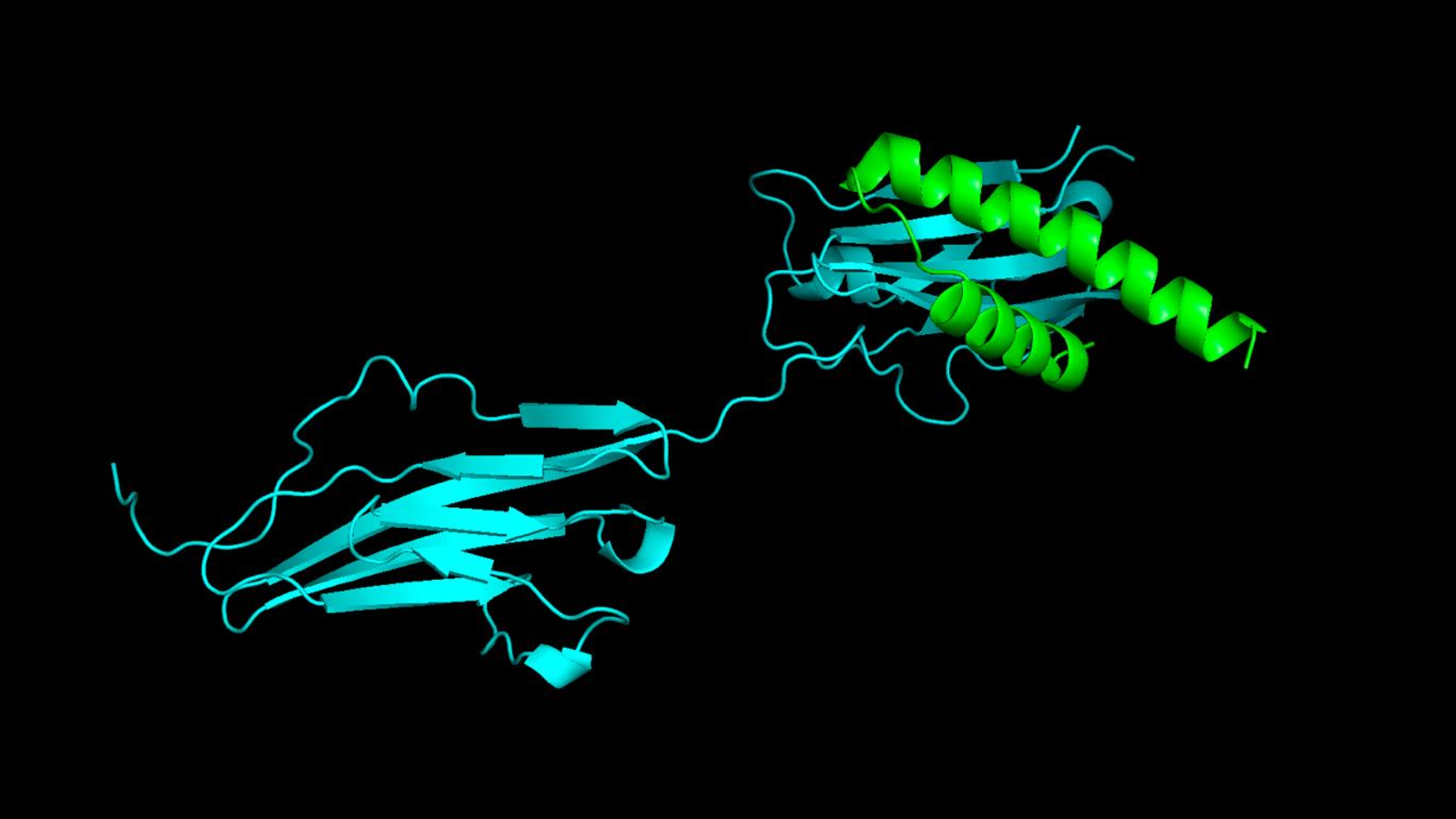
I came in without a formal protein-design background, so I focused on the systems side: getting the folding and scoring pipeline to run reliably, pushing candidate jobs through Slurm, and running the multi-GPU simulation work needed to compare target binding, off-target binding, and immunogenicity risk.
Approach
We narrowed the target to the D3 domain because it is exposed and variable enough across the FGFR family to give us a shot at specificity. From there, we compared FGFR1 and FGFR2 to avoid conserved regions, used PESTO to identify binding hotspots, and generated binders against both four-hotspot and six-hotspot configurations.
The heavy loop was candidate generation and validation. We used BoltzGen to propose binders, then folded and scored them with Boltz against FGFR2 and FGFR1. That is where most of my time went: keeping the runs moving, managing GPU jobs, checking outputs, and turning the raw model results into something the team could actually reason about during the hackathon.
Results
During the hackathon we initially thought our best candidate was around 0.35 ipSAE against FGFR2, but later review showed the stronger runs were actually 0.7+ ipSAE. The FGFR1 off-target score stayed at 0.0, which suggested that the masking and domain-selection strategy was doing what we wanted. The top candidates also looked low-risk under the immunogenicity checks.
We ended up placing top 3 in the protein design track. For me, the fun part was seeing how much useful biology work could be unlocked by treating the modeling stack like an HPC pipeline: queue jobs fast, score aggressively, and keep iterating while the clock is running.